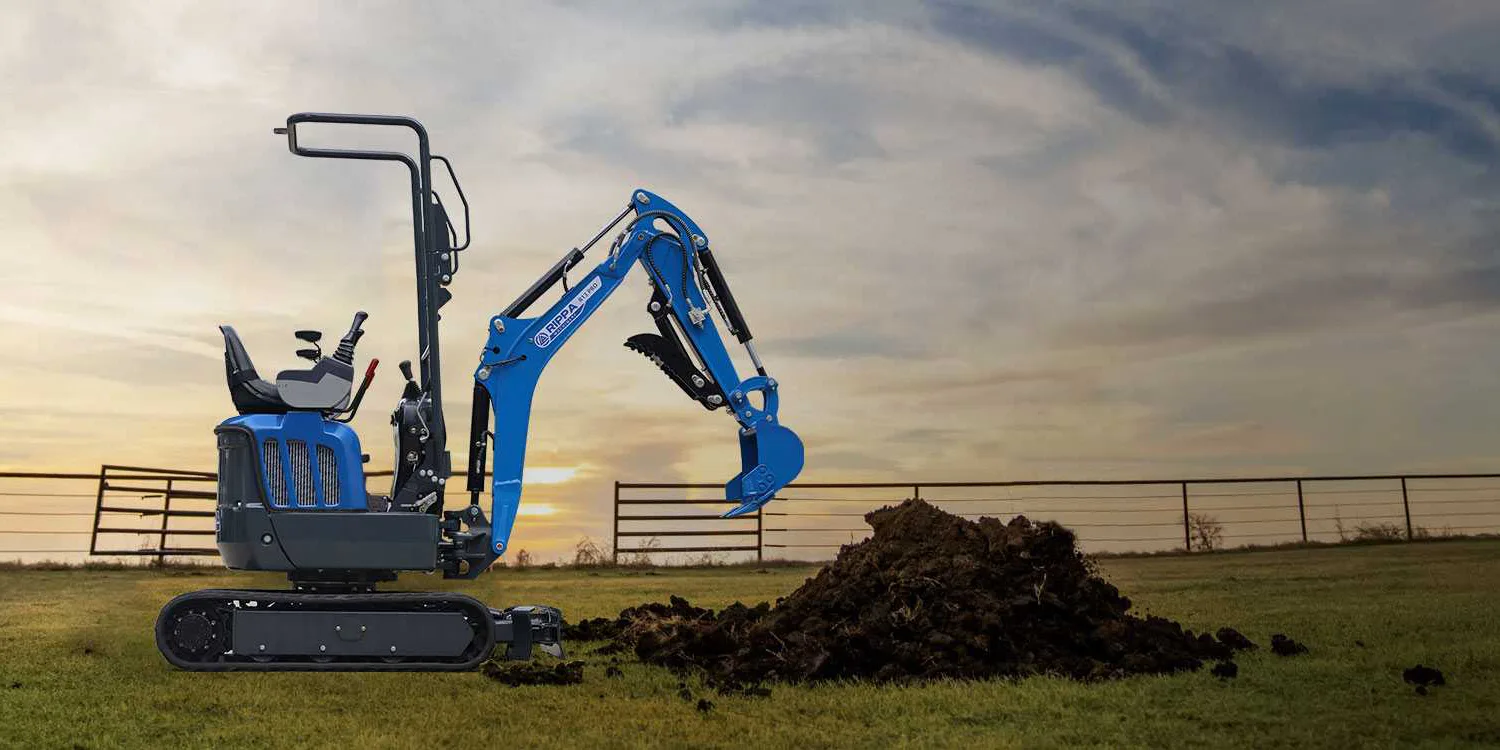
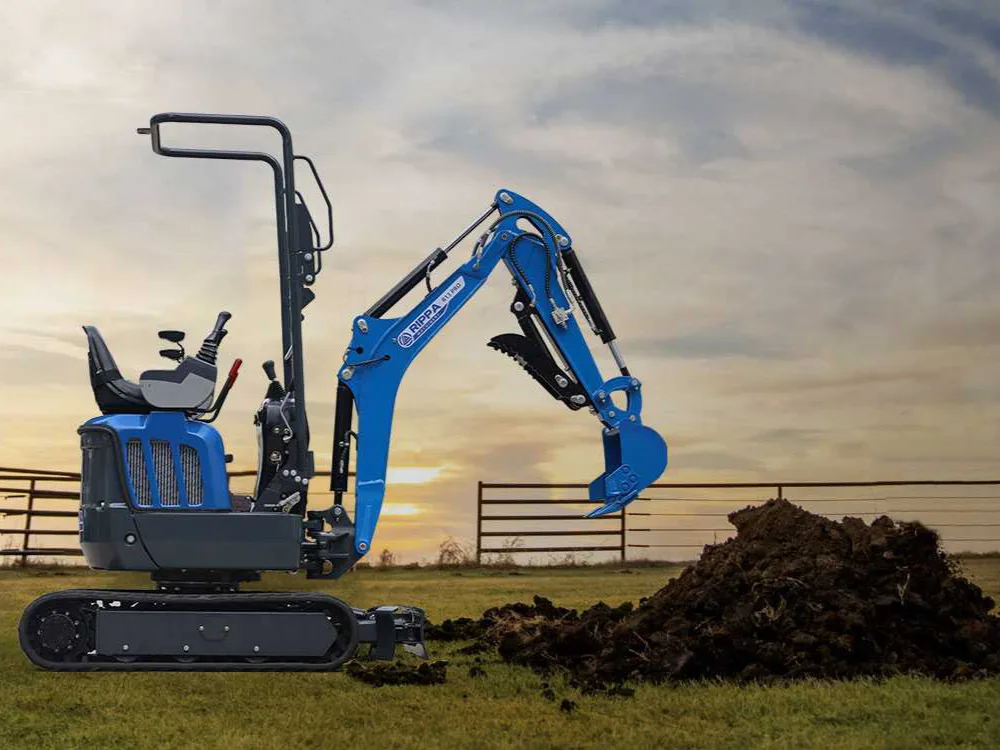
Which Rippa Mini-Excavator Model Should I Choose?
Choosing a mini excavator comes down to one thing: matching the machine to the job. Not to what looks good on paper, but to what actually works on your site, in your soil, with your access constraints. Get it wrong, and you're either pushing a machine too hard or paying for capability you never use.
This guide breaks down the Rippa lineup by real-world application, so you can stop guessing and start digging.
ECO vs PRO Series: What's the Difference?
Before getting into specific models, you need to understand how the two series are set up because this isn't just a marketing division. There's a genuine difference in what these machines are built for.
The Rippa ECO Series is generally the lighter and smaller option, and that's the point. Easier to tow, easier to move around tight sites, and well-suited for homeowners, farm owners, and anyone doing occasional work rather than running a machine five days a week. The ECO lineup includes:
- R06 ECO
- R10 ECO
- R15 ECO
The Rippa PRO Series are the heavier, more powerful mini diggers for professional users with higher usage who need increased versatility for tougher jobs such as demolition and high-volume excavation. The PRO lineup includes:
- R13 PRO
- R18 PRO
- R22 PRO
- R32 PRO
- And larger sizes
One thing worth knowing up front: the R15 ECO and R13 PRO cause a lot of confusion because the R13 is lighter than the R15, so you might assume the R13 is the ECO model, and the R15 is the PRO model. These machines are similar, but the R13 is built with higher hydraulic flow and is narrower in width when the tracks are retracted, for even tighter job site access, allowing it to go through standard doors. The R13 PRO is basically a super-powered R06 for professional use in small spaces, whereas the R15 is more suitable for home projects, small farms, and DIY enthusiasts.
| Feature | ECO Series | PRO Series |
|---|---|---|
| Models available | R06, R10, R15 | R13, R18, R22, R32 |
| Best for | Homeowners, farm owners, occasional work | Contractors, daily operators |
| Frame size | Compact and lightweight | Larger, heavier build (except the R13) |
| Transport | Tow with a standard vehicle and trailer | Require a heavy-duty trailer (except the R13) |
| Soil performance | Soft to medium soil (harder soil can be broken up first with a ripper tooth) | Compacted soil, clay, roots |
What to Check Before You Buy
A lot of people focus on the power of the mini excavator but forget to check whether it can fit on the job site and whether you can even transport it there at all.
Chassis Width: Will It Even Fit?
This is the first question, not the last. You'd be surprised how many operators get to a job and realise their machine won't fit through the access gate, the garden path, or the side of the house.
The R06 ECO and R13 PRO are the narrowest units in the lineup, built for situations like this, with a chassis width of just 747mm, making it possible to fit through not just 920mm personnel doors but also 820mm personnel doors.
The next group of sizes is the R10, R15, and R18, which are between 900mm and 1000mm in width. While slightly larger, they remain excellent for "tight access" projects, comfortably fitting through most standard garden gates and commercial-sized doorways.
For larger scale, the R22 (1300mm) and the R32 (1550mm) offer more power while staying within the mini category. The R57 and R82, on the other hand, are now 2000mm and over, making them small excavators rather than mini-excavators.
Rippa mini excavators R10 and higher have an important adjustable undercarriage. For example, after entering a building, the R13 PRO can expand to 990mm in width to increase stability for digging and lifting.
Besides chassis width, it's also really important to think about the height of the machine — will it fit in your garage, shed or other storage area? If outdoor storage is necessary, they require protection to prevent rust, hydraulic damage, and rodent damage.
Open Metal Frame vs Enclosed Cabin
Most Rippa mini excavator models offer the flexibility of an open metal frame or a fully enclosed cabin. An open canopy offers lower cost, better visibility, better ventilation, and easier access into the mini-excavator compared to an enclosed canopy (cabbed) mini-excavator. On the other hand, while an enclosure typically adds at least $1,000 to the purchase price, it is a strategic investment for many operators. An enclosed cabin allows you to keep working through rain and harsh weather, and provides a barrier against dust, debris, and insects.
Dig Depth: Match It to the Work
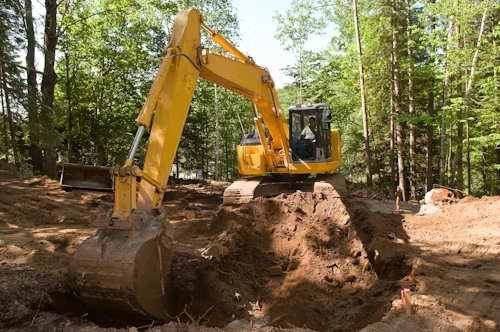
Matching dig depth to your project requirements is essential for efficiency on site.
A commonly overlooked factor is how deep you need to dig and the mini excavator's reach, rather than just its digging power. Generally speaking, as you increase the Rippa excavator model number, the sizes increase, and so does the maximum reach. For example, going from the R06 to the R10 almost doubles the reach from 1m to 1.8m.
For work under 1 meter depth, any Rippa excavator is a capable choice. The R10 and R15 generally have sufficient reach for home projects and small agricultural projects. For deeper utility trenching, retaining wall footings, or jobs exceeding 2 meters, you'll need a larger PRO model (R18 and up).
Rippa ECO Series
| Model | Weight | Max Dig Depth | Capable Of |
|---|---|---|---|
| R06 ECO | ~0.7t | ~1.0 m | Light landscaping, narrow trench digging, shallow footings, stump removal, demolition rubble clearing |
| R10 ECO | ~1.0t | ~1.8 m | Landscaping, drainage trenches, footings and slab preparation, smaller swimming pool excavation |
| R15 ECO | ~1.5t | ~1.8 m | Landscaping, drainage trenches, footings and slab preparation, smaller swimming pool excavation |
Rippa PRO Series
| Model | Weight | Max Dig Depth | Capable Of |
|---|---|---|---|
| R13 PRO | ~1.3t | ~2.0 m | Landscaping, drainage trenches, footings and slab preparation, smaller swimming pool excavation |
| R18 PRO | ~1.8t | ~2.4 m | Landscaping, drainage trenches, footings and slab preparation, smaller swimming pool excavation, with more safety margin |
| R22 PRO | ~2.3t | ~2.3 m | Landscaping, drainage trenches, footings and slab preparation, smaller swimming pool excavation, with more safety margin |
| R32 PRO | ~3.2t | ~2.8 m | Wider trench work, slope and embankment shaping, ditch clearing and maintenance, smaller pond and dam construction |
.webp)
Larger models handle deeper excavation and heavier material with greater stability.
Lifting Capacity: Beyond the Dig
While digging depth is a priority, you should also consider lifting capacity if you plan to move heavy rocks, concrete sleepers, or equipment. Generally, the heavier the machine, the more it can safely lift. For example, a mid-range model like the Rippa R15 can typically lift between 400kg and 750 kg, depending on how far the boom is extended and the position of the dozer blade.
If you are using your excavator as a crane for heavy objects, always double-check the specific lift charts for that model. Using the dozer blade as an anchor can significantly increase stability, but exceeding the machine's limit can cause tipping, especially when swinging a load over the side of the tracks.
Transport & Towing
In Australia, the "magic number" for most buyers is 3.5 tonnes — the maximum braked towing limit for popular 4WD utes. Even the R18 Pro, which weighs roughly 1.8 tonnes, stays comfortably under the 3.5t limit once you factor in a dual-axle trailer and a full set of buckets.
Once you move to the R22, this becomes risky, and an R32 will require heavier-duty transport. A 2.5 to 3.2 tonne machine plus a heavy-duty trailer will put you over the 4-tonne mark, requiring a light truck or professional tilt-tray delivery service.
| Model Series | Machine Weight | Trailer Needed | Best Vehicle |
|---|---|---|---|
| R06 / R10 ECO | ~0.7t – 1.0t | Single Axle Trailer | SUV or Standard Ute |
| R13 / R15 / R18 | ~1.3t – 1.8t | Dual Axle Trailer | Standard 4WD Ute |
| R22 / R32 PRO | ~2.2t – 3.2t | Plant Trailer (4t+) | Light Truck (4.5t+) |
Which Rippa Mini Excavator Should You Choose?
The Tight-Access Specialists (R06 & R13): If you need to navigate through standard personnel doors or narrow side gates, the R06 is the go-to micro-digger. If you need that same tight access but require significantly more power and reach, the R13 is the better professional choice.
The Home & Farm Versatility (R10 & R15): Ideal for broader residential projects — able to break through tougher soil, dig deeper, and lift more, while still being easy to store.
The Professional All-Rounder (R18 PRO): The largest machine you can typically tow behind a standard 3.5t rated 4WD ute. Perfect for professional contractors who need high-volume excavation capability.
The Heavy-Duty League (R22 to R82): If your project involves high volumes of excavation or deep site prep without strict size constraints, move up to the R22 or R32.
Final Thoughts
The best Rippa mini excavator is the one that matches your access limitations, digging requirements, and much more. Don't choose your machine just based on power alone.
Not sure which Rippa model suits your job?
Get in touch and we'll recommend the right machine based on your site, soil condition and workload.